People ask us all the time: when is the best time to visit Greer? The honest answer is that it depends on what you're looking for — because every season here has its own personality, its own gifts, its own reasons to come back.
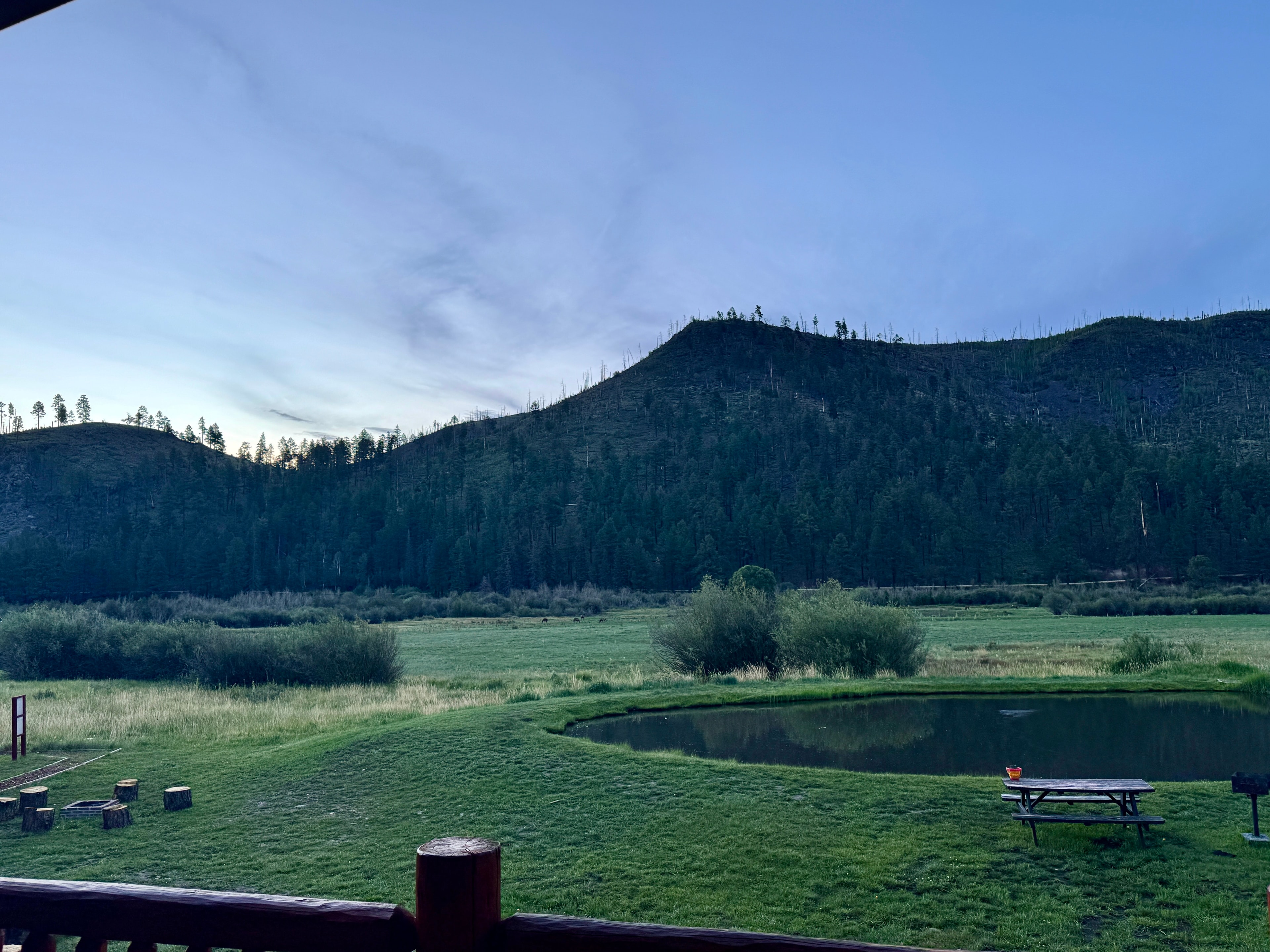
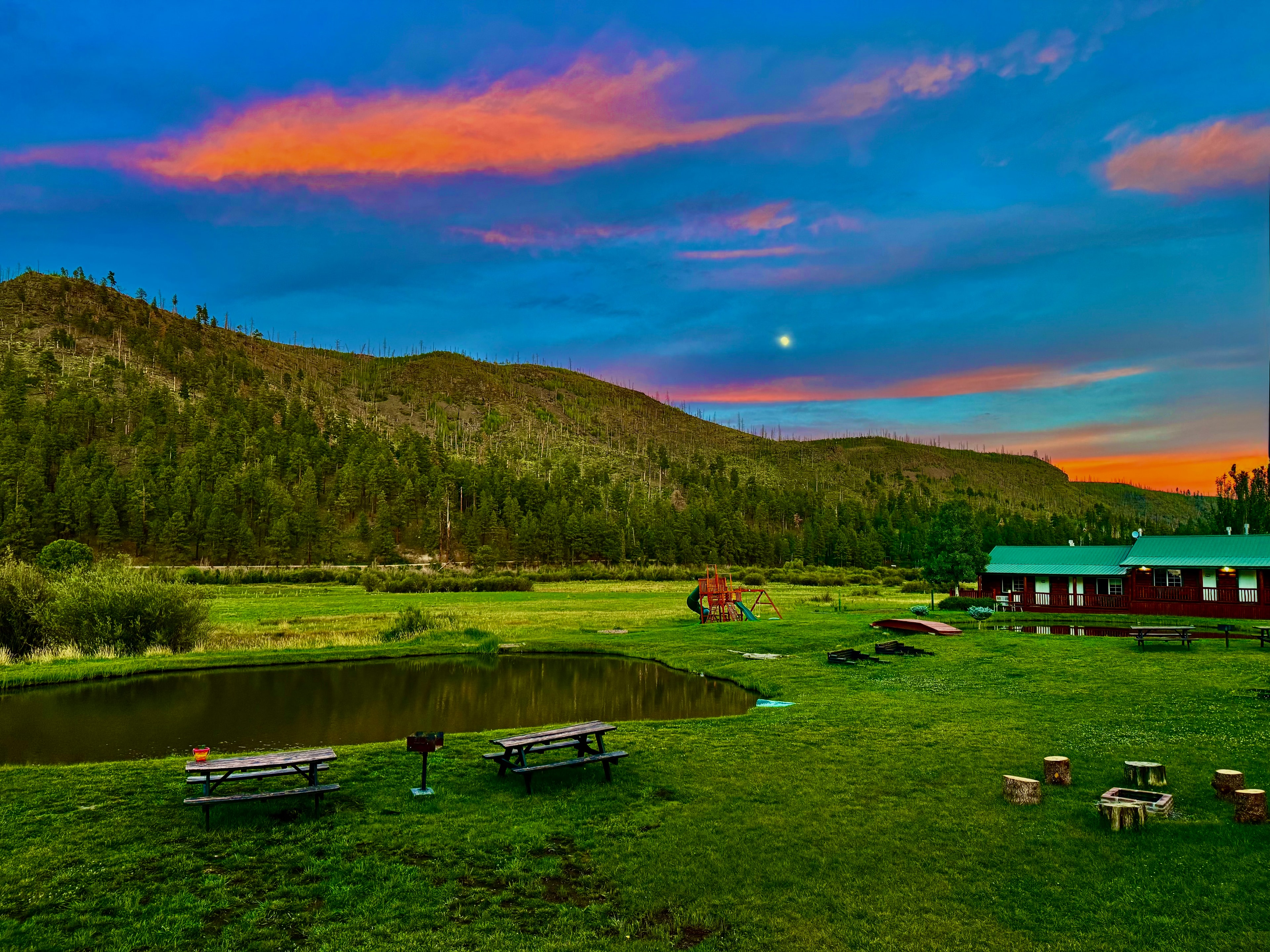
Summer is prime season, and for good reason. The days are warm and bright, the kind of warm that feels earned at 8,500 feet — nothing like the scorching heat of the desert below. Afternoons bring the famous White Mountains thunderstorms, rolling in fast and dramatic over the peaks, dropping rain that smells like pine and wet earth, then clearing just as quickly to leave the sky an impossible shade of blue. The pond fills with life. Wildflowers line every trail. The elk are out in the meadows morning and evening, and the osprey circles the trout pond like clockwork. Summer in Greer is what people mean when they talk about escaping the Arizona heat — this is the escape.
Fall is the other prime season, and arguably the most beautiful. The aspens turn in late September and into October, and when they go, they go all at once — a sudden blaze of gold and amber that lights up the hillsides and reflects in the still water of the pond. The air sharpens. The crowds thin. The elk are in full rut, bugling at dawn in a sound that carries across the whole valley. There's a particular quality to fall light in the mountains — low and golden, the way it slants through the trees in the late afternoon — that makes everything look like a painting. If you've never seen a White Mountains fall, it belongs on your list.
Winter brings a different Greer entirely, and it's one that not everyone knows about. The snow comes quietly, usually by November, and it transforms the landscape into something out of a storybook. The pines hold their snow for days. The pond freezes at the edges. The meadows go white and still, and the only tracks you see are the ones left by the elk and deer that move through in the early morning.
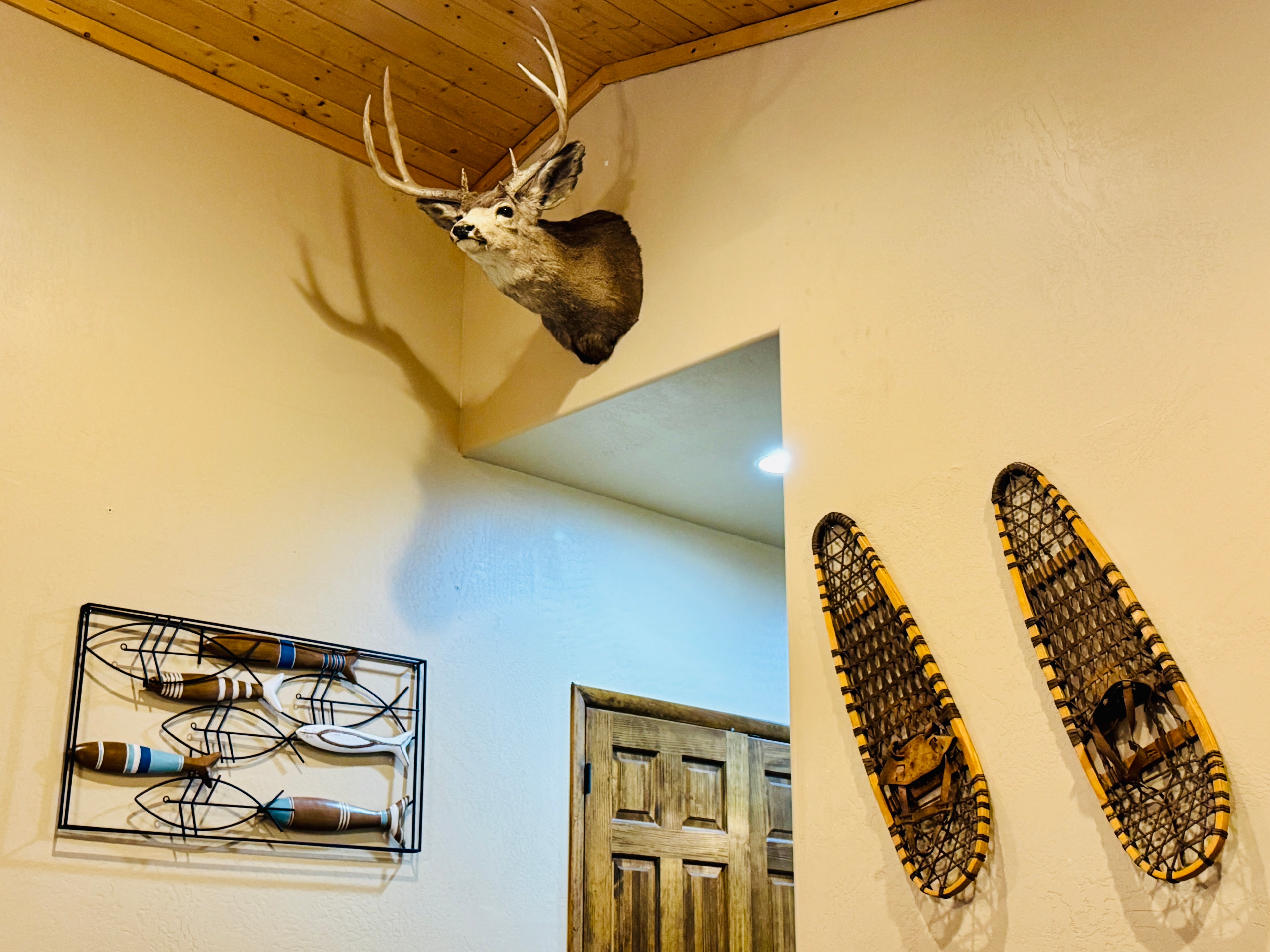
Sunrise Park Resort, just a short drive from the cabin, opens for ski season and brings the whole area to life in a different way. Downhill runs, cross-country trails, snowshoeing — the mountain becomes a playground. And then you come back to the cabin, stomp the snow off your boots at the door, and the fireplace is waiting. There is nothing quite like settling in front of a warm fire after a cold day on the mountain. Nothing.
Winter nights in Greer are extraordinary. The sky is clear and dark and absolutely full of stars — the kind of sky you forget exists until you're standing under it again. The silence is total. The snow muffles everything. You can stand on the deck in the cold and feel the whole world slow down to almost nothing.
Spring is the quietest season, a little muddy, a little unpredictable — snow one day, wildflowers the next. The creek runs high with snowmelt. The birds return. The aspens leaf out in that tender, pale green that only lasts a few weeks. It's a season for people who like having a place to themselves.
Every season in Greer is worth experiencing. But if you're planning your first visit, come in summer for the full mountain experience, or fall for the aspens and the golden light. And if you've already been in the warm months, come back in winter. The cabin looks different under snow. Better, somehow. Quieter. More itself.